

.png)
Beating the Carolina Humidity: 5 Ways to Keep Your Covered Porch Cool During Charlotte Summers
If you've lived in Charlotte for even one summer, you know the drill. June rolls in, the temperature climbs into the 90s, and the humidity makes it feel like you're walking through a warm, wet blanket every time you step outside. It's the kind of heat that pushes most people straight from their car to their air conditioning, skipping the backyard entirely.

But here's the thing: a covered porch doesn't have to feel like a sauna. With the right design choices and a few smart additions, your screened porch or covered outdoor space can actually be comfortable enough to enjoy well into August, even on the most brutal Charlotte afternoons. At Ebony Outdoor Living, we build porches here in Indian Trail and across the Charlotte metro, and we've seen firsthand what works and what doesn't when it comes to staying cool in the Carolina heat.
Here are five ways to make your covered porch a place you actually want to spend time in all summer long.
1. Start with the Right Screening System
If you have a screened porch, the screening material itself makes a bigger difference than most homeowners realize. Standard fiberglass screen keeps bugs out, but it doesn't do much to block radiant heat or solar glare. On a hot afternoon with the sun hitting your porch at an angle, that can leave your space feeling stuffy and bright in all the wrong ways.
Consider a Solar or Privacy Screen
Solar screening is designed to block a percentage of UV rays and reduce glare without completely closing off your view. Depending on the density you choose, you can cut solar heat gain significantly while still enjoying your backyard view. Some homeowners also opt for a tighter weave screen that doubles as privacy screening, which has the added benefit of slowing airflow just enough to prevent that furnace-blast feeling when hot air moves in from the west.
EZe Breeze Panels Are a Game Changer
For homeowners who want year-round flexibility, EZe Breeze vinyl panels let you close off your porch during the peak afternoon heat, then open things back up once the temperature drops in the evening. We install EZe Breeze systems regularly for homeowners throughout Waxhaw, Matthews, and Weddington, and the difference in comfort, especially in July and August, is noticeable. You get the feel of an open-air porch in the morning and the comfort of an enclosed room when the afternoon sun is at its worst.
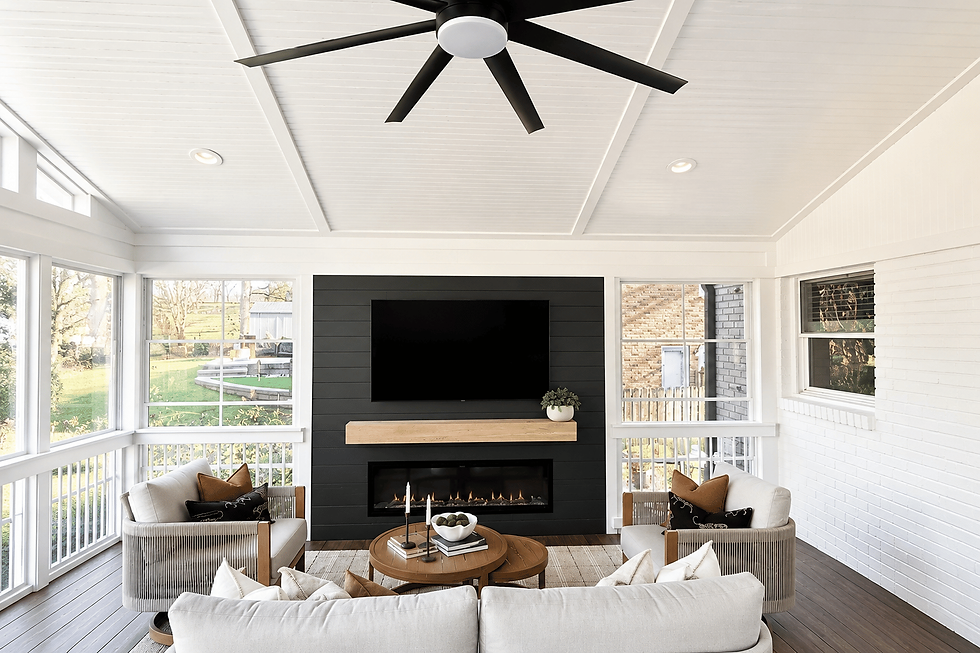
2. Add a Ceiling Fan (or Two)
This one sounds simple, and it is, but it's also one of the most effective things you can do for a covered porch in the Charlotte area. A ceiling fan doesn't lower the air temperature, but it creates a wind-chill effect that makes 90 degrees feel closer to 80. On a screened porch with good cross-ventilation, a properly sized fan can make an enormous difference in how livable the space feels.

Sizing Matters
For a standard 12x16 porch, one well-placed fan is usually sufficient. For larger spaces, 16x20 and up, two fans positioned to overlap airflow coverage will serve you much better than a single large fan in the center. We recommend looking at wet-rated or damp-rated models designed specifically for outdoor and semi-outdoor use, since standard indoor fans will degrade quickly in humidity.
Dual-Direction Functionality
Most ceiling fans have a reversible motor. In summer, you want counterclockwise rotation, which pushes air straight down and creates that cooling breeze effect. It's a small detail, but worth checking before the season starts.
3. Think About Roof Design and Overhead Coverage
The structure of your porch itself plays a major role in how hot or cool the space feels. If you're in the planning stages of building a covered porch in Charlotte, this is worth thinking through before you break ground.
Insulated Roofing Panels
Solid roof systems, especially those built with insulated panels rather than single-layer materials, dramatically reduce the amount of heat that radiates down from above. On a black asphalt shingle roof in direct afternoon sun, surface temperatures can exceed 150 degrees. That heat radiates downward into your porch space even when you're shaded from direct sunlight. An insulated panel system puts a thermal break between that hot roof surface and the space where you're trying to relax.
Roof Pitch and Overhang
A steeper pitch moves hot air up and out more efficiently. A deeper overhang on the south and west sides of your porch blocks more of the low-angle afternoon sun that tends to be the most intense during Charlotte summers. These aren't always things homeowners think about when planning a porch, but an experienced builder will design with local sun angles in mind, especially for homeowners in communities like Marvin, Ballantyne, and Lake Wylie where large lots mean the porch gets full afternoon exposure.
4. Incorporate a Misting System or Outdoor Fan
For open-air covered patios and pergolas where you're not working with a full enclosure, a misting system is one of the most effective ways to cool the immediate area. Misting systems work by forcing water through tiny nozzles at high pressure, creating a fine mist that evaporates almost instantly. That evaporation process pulls heat out of the surrounding air, dropping the ambient temperature by 10 to 20 degrees in the immediate vicinity.

Low-Pressure vs. High-Pressure Systems
Residential misting systems fall into two main categories. Low-pressure systems connect directly to your garden hose and work reasonably well but tend to leave surfaces slightly damp. High-pressure systems use a dedicated pump to achieve finer atomization, which means the mist evaporates before it hits surfaces, keeping your furniture and floors dry. For homeowners investing in a quality outdoor kitchen or high-end patio space, the high-pressure option is typically worth it.
Pergola-Mounted Fans
Large-format outdoor fans mounted to pergola beams have become increasingly popular in outdoor living spaces across the Charlotte area. They move a significant volume of air and are designed to handle outdoor conditions year-round. Combined with good shade coverage from a pergola with louvered or lattice top panels, a well-placed outdoor fan can make a partially shaded patio surprisingly pleasant even on hot summer afternoons.
5. Landscape Strategically Around Your Porch
This one takes some patience, but it pays off for years. The plants and trees surrounding your covered porch have a real impact on how hot the space gets, especially on the west-facing side where afternoon sun hits hardest.
Shade Trees on the West Side
A fast-growing shade tree planted on the west side of your property can begin providing meaningful shade within three to five years. Species like Leyland cypress, Nellie Stevens holly, or native options like red maple and river birch do well in the Charlotte area and can significantly reduce direct afternoon sun exposure on a west-facing porch. Over time, this is one of the most effective (and cost-free, once established) ways to cool a porch space naturally.
Foundation Plantings and Ground Cover
Paved surfaces absorb heat and radiate it back out, which is why patios can feel oppressive even in the shade. Breaking up the hardscape with planters, groundcover, or a border of low-growing shrubs around the perimeter of your patio or porch helps reduce that radiant heat effect. Grass, mulch, and plant material all stay cooler than concrete or pavers, so keeping some greenery around your outdoor space makes a measurable difference in overall comfort.
Building for Charlotte Summers Takes Local Know-How
Every porch or covered patio we build at Ebony Outdoor Living is designed with Charlotte's climate in mind. That means thinking about sun angles, prevailing winds, humidity, and the way late-afternoon heat moves across a yard during a Carolina summer. It's the kind of thing that doesn't show up in a catalog, but it shows up in how comfortable your space feels in July.
Whether you're planning a new screened porch in Weddington, a pergola-covered patio in Huntersville, or a full outdoor living space in Ballantyne, we'd love to talk through what will work best for your yard, your family, and the way you want to use your outdoor space.
Call us at 704-776-1822 or visit ebonyoutdoor.com to schedule your free estimate. There's no pressure, just an honest conversation about what's possible and what it takes to build it right.
Frequently Asked Questions
What is the best type of ceiling fan for a screened porch in Charlotte?
Look for a fan rated "damp" or "wet" for outdoor or semi-outdoor use. Charlotte's humidity can degrade standard indoor fans quickly, especially through the summer months. For most covered porches in the 12x16 to 16x20 range, a 52-inch fan is a good starting point. Anything larger and you may want two fans positioned to overlap coverage rather than one oversized unit in the center.
Do misting systems work in high humidity?
They work best with a high-pressure pump system, which atomizes water into such fine particles that it evaporates almost instantly rather than settling on surfaces. In a humid climate like Charlotte's, low-pressure systems that connect to a garden hose can leave things feeling damp. A high-pressure system avoids that problem and still delivers a noticeable drop in ambient temperature, typically 10 to 20 degrees in the immediate area.
What is an EZe Breeze porch enclosure and is it worth it?
EZe Breeze is a vinyl panel system designed for screened porches that lets you open and close your enclosure depending on the weather. On a hot July afternoon you can close the panels to block radiant heat from the west, then slide them open once the temperature drops in the evening. It's one of the most practical upgrades for Charlotte homeowners who want year-round use out of their porch without committing to a fully enclosed four-season room.
How much does it cost to add a ceiling fan or misting system to an existing porch?
A quality outdoor ceiling fan installed on an existing covered porch typically runs $300 to $700 depending on the fan model and whether new wiring is needed. A residential high-pressure misting system can range from $500 to $2,500 or more depending on the length of the run and whether it's being integrated into a new build or added to an existing structure. Both are relatively low-cost upgrades compared to the overall investment in a custom porch or patio.
Which direction on a ceiling fan is correct for summer?
Counterclockwise. This pushes air straight down and creates the cooling wind-chill effect you want during hot weather. Most fans have a small switch on the motor housing that controls direction. It's worth checking at the start of each season since the fan works in reverse during winter to pull cool air up and redistribute warm air that collects near the ceiling.
How do I keep my patio cool if it doesn't have a full enclosure?
For open-air covered patios and pergolas, a combination of shade, airflow, and surface choices makes the biggest difference. A pergola with louvered or lattice panels blocks direct sun while still allowing airflow. A large-format outdoor fan mounted to the pergola beams moves air through the space. Surrounding the patio with plants and groundcover instead of all hardscape also reduces the radiant heat that bounces back up from paved surfaces on a hot afternoon.
What trees grow well near a porch in the Charlotte area?
Several fast-growing species do well in the Piedmont region. Leyland cypress and Nellie Stevens holly are popular for creating a privacy screen on the west or south side of a yard. For broader shade coverage, red maple, river birch, and willow oak are native or well-adapted options that establish relatively quickly and hold up well in the clay-heavy soils common across Union County and Mecklenburg County.


Comments